 consentics
How consent and analytics work as one system
Here's exactly what happens when a visitor accepts, and exactly what happens when they don't.
Full measurement, first-party
Once a visitor agrees to tracking, Consentics collects events first-party: page views, sessions, traffic sources, and, for commerce sites, purchase events. The dashboard reports on this in full, the same data your CMP just promised the visitor it would honour.
Measurement continues, differently
Decline consent, and Consentics doesn't drop you from the data or keep tracking you anyway. It switches to aggregate measurement with no persistent identifier: enough to keep your dashboard reporting on real traffic patterns, without identifying that visitor individually. This is what we mean by one system: the same product handles both cases, instead of a CMP recording a decision that a separate analytics tool then ignores.
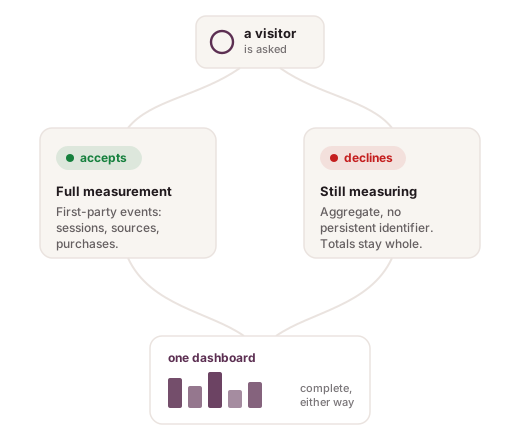
A banner that actually connects to what it's protecting
The consent banner captures a visitor's decision and keeps a record of it. That record is what the analytics collector reads before it decides how to measure that visitor. There's no second integration step, and no separate vendor to keep in sync.
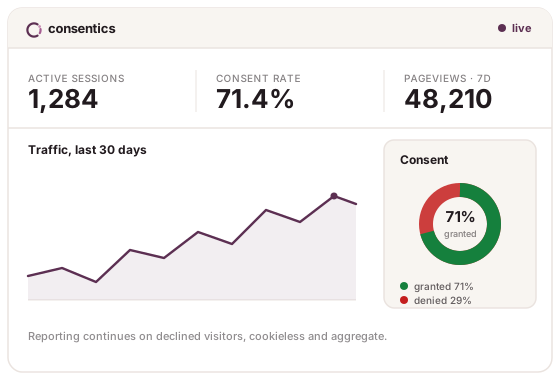
For sites that sell things, more unlocks automatically
If your site emits commerce events, funnel, average order value, and revenue-by-channel reporting activate automatically, keyed from the purchase events your tag already sends. No catalogue to upload, no feed to configure. Retention, cohort, and lifetime-value reporting is also part of this depth layer. It's new, and we'll say so plainly rather than oversell it: this is not yet a mature, long-proven feature the way it is for a dedicated retention tool. It's built on real purchase data from day one, and we'll keep saying honestly how proven it is as real accounts use it.
This depth layer is specific to sites that emit commerce events. A brochure site, a SaaS marketing site, or a publisher simply doesn't unlock it, and doesn't need to.
What we're not
Consentics isn't a paid-media attribution tool. We don't ingest ad spend from Meta or Google, and we don't model multi-touch attribution or ROAS. If that's what you need, a dedicated attribution tool is the right fit, not us. We're also not a session-replay, error-tracking, or web-vitals product. Consentics does one thing: consent-aware analytics that don't go blind.